
FOEBE+ - FOstering Entrepreneurship for a sustainable and innovative BioEconomy
October 06 2026The FOEBE+ project (FOstering Entrepreneurship for a sustainable and innovative BioEconomy) is the follow-up to an initial project, named FOEBE (FOstering Entrepreneurship for BioEconomy), which ended in August 2023. Both were co-funded by Erasmus+ over a 3-year period and aimed to develop students’ entrepreneurial skills in bioeconomy to accelerate the sector’s deployment across the European Union. FOEBE+ concluded in August 2026, after three cohorts of students were trained across the seven partner universities.

FOEBE+ was coordinated by AgroParisTech, with partner universities including the University of Hohenheim (UHOH – Germany), Wageningen University & Research (WUR – Netherlands), the University of Natural Resources and Life Sciences, Vienna (BOKU – Austria), the University of Eastern Finland (UEF – Finland), the University of Bologna (UNIBO – Italy), and the Warsaw University of Life Sciences (SGGW – Poland).
The bioeconomy sector is a priority for the European Union. This systemic approach, encompassing various economic sectors and rooted in circularity and sustainability principles, requires a paradigm shift in both educational pathways and teaching practices to equip young professionals with appropriate entrepreneurial skills. Indeed, innovative, sustainable, and economically viable solutions must be identified to fully deploy the bioeconomy.
Currently, entrepreneurship training programmes do not meet the sector’s needs, holding back its development potential. Furthermore, no harmonised European approach exists on this topic, despite the bioeconomy being designated as a key sector. Nevertheless, developing innovative educational content at the European level enables students, as future entrepreneurs, to gain a global perspective on all dimensions of the bioeconomy.
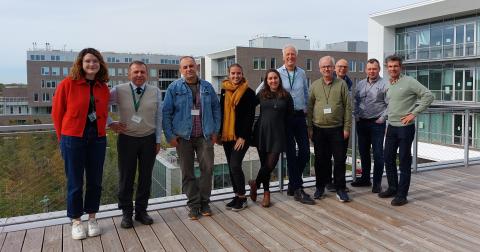
The FOEBE+ project fulfilled this mission, becoming a driver of change in bioeconomy education. Seven higher education institutions (see list above), members of the EBU Alliance (European Bioeconomy University), joined forces to offer students the best possible training framework. This partnership leveraged their expertise, resources, and know-how, as well as those of their industrial partners, to deliver relevant additional modules to the sector’s future entrepreneurs.
The overall project approach focused on a blended learning format, combining e-learning and face-to-face sessions, with an emphasis on innovative teaching practices. FOEBE+ thus enabled Master’s, engineering, and PhD students, as well as lifelong learning participants, to complete modules and courses that enriched their educational paths.
The project encompassed a wide range of activities and outputs:
- A survey of bioeconomy stakeholders to precisely define expected qualifications and skill profiles;
- Sharing of innovative practices (hackathons, competitions, non-formal education, contextual learning);
- Creation of a digital platform (courses and training materials);
Development of a guide on innovative training to encourage entrepreneurship through education; - Creation, dissemination, and sharing of new educational resources, additional courses, and innovative training practices at the core of the project;
- Production of a public report presenting recommendations on how to equip bioeconomy students with the appropriate set of skills, position them as innovators, and bring their ideas to market.
Thanks to its flexible and optimal approach to bioeconomy entrepreneurship education, FOEBE+ enhanced the potential of over 200 students to innovate and bring their ideas to fruition and market implementation. Several project alumni have since launched their own start-ups, won the the Bio-based Innovation Student Challenge Europe (BISC-E), or become EU Bioeconomy Youth Ambassadors.
The programme was based on blended learning methods, both synchronous and asynchronous, remote and in-person. Requiring approximately three hours of personal workload per week, the FOEBE+ curriculum fitted into students’ schedules and offered a course composed of eight modules, taught in English:
- Introduction to bioeconomy;
- Accelerated sustainable entrepreneurship;
- Creative design and idea generation;
- Intellectual property;
- Business management and corporate finance;
- Leadership and execution;
- Marketing;
- Digitalisation in bioeconomy.
These eight modules were followed by a face-to-face week, the “Bioeconomy Challenge”, hosted by each partner university from 2025 onwards, during which students developed entrepreneurial projects in small groups to apply the concepts learned in the online courses.
At the end of the programme, students reported a significant improvement in their entrepreneurial knowledge and skills.
Highlights
Across three cohorts delivered by seven partner universities:
- 206 students from master’s and PhD programmes took part.
- The participants represented 39 countries and had a mean age of 26.9 years.
Across the four dimensions assessed:
- entrepreneurial knowledge increased from 2.66 to 3.88 out of 5 (+1.22 points),
- topic-related knowledge from 2.84 to 3.91 (+1.07),
- entrepreneurial abilities from 3.11 to 3.86 (+0.75),
- and soft skills from 3.94 to 4.34 (+0.40).
Overall, the level of competence reached 4 out of 5, with a mean improvement of 0.87 points across all dimensions between entry and exit. Satisfaction with the modules was also high: videos and materials received an average rating of 4.12 out of 5, quizzes 3.82, classes 3.98, resources 4.08, and evaluations 4.04.

FOEBE+ project results
The results of this project are available on the Erasmus+ platform.