
Argentina, Brazil: exploring agroforestry
June 29 2026During their gap year, Amarande, Lison, Esteban and Paul – students at AgroParisTech and members of the association Sous l’ombre de l’arbre – travelled through Argentina and Brazil for several months to investigate agroforestry practices. Having conducted over 70 interviews with farmers, researchers, public institutions and businesses, they documented the diversity of South American agroforestry systems, their ecosystem benefits and their role in the resilience of farms. We meet the team, who have returned with plans for a documentary and a wealth of insights into agriculture, the environment and local communities.
Could you tell us about the association Sous l’ombre de l’arbre and the expedition you led?
The association Sous l’Ombre de l’Arbre, now on its seventh mission, aims to promote agroforestry by producing documentaries on this practice in different regions of the world. This year, the team consists of four students, three of whom are from the Nancy campus and the fourth from the Palaiseau campus. Our training in forestry and environmental studies has encouraged us to view trees in a way that goes beyond the mere benefits they may offer in terms of agricultural yields, such as timber production. We therefore set off for Argentina and Brazil to compare, on either side of the border, agroforestry dynamics, and to understand their origins, from political, cultural and social perspectives. The choice of agroforestry as the association’s guiding principle is linked to the numerous ecosystem services it provides, the resilience of the systems, and the income it generates – which, far more often than one might think, is very attractive to producers.
Why did you choose Argentina and Brazil, and which regions did you explore?
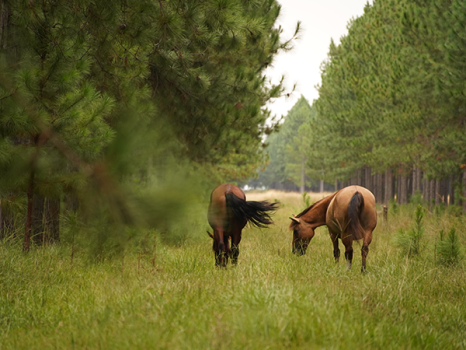
Argentina and Brazil are two countries whose agricultural sectors are in the news at the moment due to the EU-MERCOSUR agreements. Furthermore, they are two countries with very different social and political structures, enabling us to make a comparison in the context of agroforestry development. Argentina has been characterised by a degree of political instability and is focused on the export of low-cost agricultural commodities. Brazil’s agricultural policy is primarily geared towards the country’s food sovereignty and towards enabling the poorest farming communities to make a living. Although both countries are very large, we have chosen to focus on southern Brazil and northern Argentina in order to examine a similar soil and climate context, characterised by high rainfall, relatively cold winters and rather poor soils. In these regions, livestock farming and the cultivation of mate – a stimulating drink that is very popular in Argentina, Uruguay and southern Brazil – play a significant role.
How did you develop your fieldwork methodology?
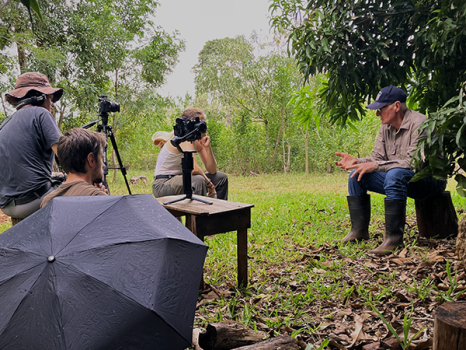
We conducted 76 interviews with farmers, researchers, public bodies and businesses. Before we set off, we had read articles and held video conference discussions with local researchers to gain a better understanding of the issues at stake. We had prepared questions in advance, including some that we asked in every interview, in order to gather a broad range of perspectives. This complementarity between the different backgrounds was really important to us: it enabled us to understand how the system works, from the challenges faced by farmers to the policy measures aimed at addressing them, including groups seeking to promote the products more effectively. Had we overlooked any of these stakeholders, we would not have been able to gain a full understanding of the subject.
What concrete benefits does agroforestry bring to the South American farming systems you have observed?
We have seen that in Argentina, in addition to the significant benefits in terms of soil fertility, temperature regulation for livestock and erosion control, agroforestry is very often a source of income diversification in the face of the political and economic instability the country has been experiencing for decades. In Brazil, many farmers have only very small plots of land, and agroforestry therefore enables optimisation of production and a very significant diversification of the crops produced, supported by strong government policy and often essential to the livelihood of the farmer and their family. We have seen plots containing up to 60 species of agronomic interest.
In what ways did your studies at AgroParisTech prepare you for this field project?
First of all, the association Sous l’Ombre de l’Arbre is part of AgroParisTech’s student community, and it was within this context that we decided to make a documentary on a subject we’re passionate about. During our studies, we have also been able to carry out projects that are similar in certain respects to what we have done here, and our knowledge of agronomy, the environment and forestry is, of course, essential to the discussions we have whilst we are here.
Any advice for those who are hesitant to embark on a similar project?
Don’t hesitate! Find a group you get on well with, a topic you’re passionate about, and take the plunge – get in touch with local people who can give you some advice!
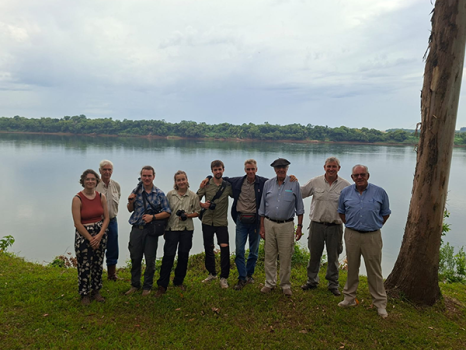
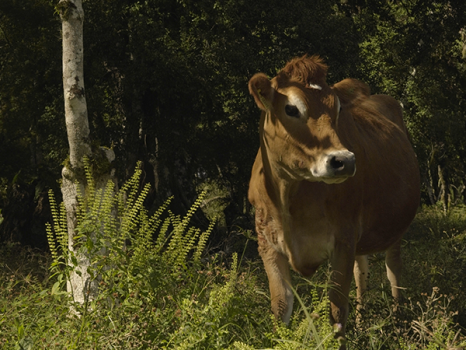
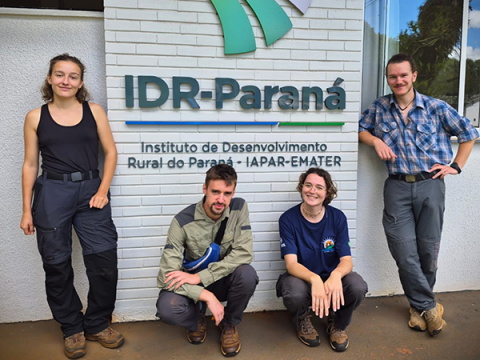
Some pictures taken during the projet